Tuesday, 24 June 2025

Co-Branding in the Digital Era: More Than a Partnership — A Powerful Digital Ecosystem
 

Co-Branding in the Digital Era: More Than a Partnership — A Powerful Digital Ecosystem

In today’s noisy, fast-moving digital world, building visibility and trust is harder than ever. Brands are competing not just for market share but for attention spans — and shouting louder isn't the solution.

Instead, the smartest brands are collaborating strategically. The result? Not just temporary buzz, but long-term value through co-branding.

This article explores what co-branding truly means in the digital age — and why backlinks, those silent SEO powerhouses, might just be the most underrated advantage of all.

What Is Co-Branding?

Co-branding is when two or more brands come together to create a joint product, service, experience, or campaign that combines their identities. This is not about a celebrity wearing a T-shirt or an influencer holding a shampoo bottle. It’s a mutually beneficial, strategic alliance designed to offer value that neither could deliver alone.

In the digital era, co-branding means more than logos or physical products. It includes:

  • App integrations

  • Webinars

  • Content co-creation

  • Joint loyalty programs

  • Shared digital ecosystems with powerful backlink strategies


Backlinks: The Silent Superpower of Digital Co-Branding

Backlinks — when one website links to another — are a critical SEO factor that Google uses to determine credibility and authority.

When brands co-create a product or content and link to each other, they create a shared trust network online.


Why Backlinks Matter in Co-Branding

  • SEO Boost: Each brand helps the other rank higher on search engines.

  • Cross-Audience Discovery: Customers follow links to discover the co-brand’s universe.

  • Content Longevity: Unlike ads, backlinks live forever in blog posts, product pages, and news coverage.

  • Value Equity: Backlinks bring lasting referral traffic and increase domain authority.

Think of backlinks as the digital infrastructure that keeps your co-branding partnership visible, searchable, and measurable — long after the campaign ends.


Co-Branding vs. Brand Endorsement: Know the Difference

While both may involve partnerships, co-branding and endorsements are fundamentally different in intent, structure, and digital impact.

Comparative Table: Co-Branding vs. Brand Endorsement

Aspect

Co-Branding

Brand Endorsement

Definition

Strategic collaboration to co-create a new product, experience, or ecosystem

A promotional deal where a celebrity/influencer supports an existing product

Nature of Relationship

Mutual, long-term, collaborative

Transactional, often short-term

Main Output

Joint product, service, app, or campaign

Advertisement, testimonial, sponsored content

Audience Synergy

Combines and cross-pollinates audiences

Leverages the fanbase of the endorser

Backlink & SEO Potential

High — cross-linking on sites, blogs, landing pages

Low — limited to social mentions

Messaging Control

Shared brand narrative

Controlled by endorser or platform

Risk Level

Moderate — risk if partner misaligns

High — PR risk if endorser missteps

Digital Integration

Deep — multi-platform presence

Shallow — platform-specific content

Longevity

Long-term digital presence (backlinks, apps)

Often short-lived

Example

Apple x Nike Watch

Virat Kohli endorsing Puma shoes


Types of Co-Branding in the Digital Age

There’s no one-size-fits-all strategy. Successful co-branding adapts to the goals, strengths, and audience of both brands. Here’s a comprehensive view of the most effective co-branding models today:

Co-Branding Models and Digital Benefits

Model

Definition

Key Digital Use

Primary Goal

Backlink/SEO Value

Example

Ingredient Co-Branding

One brand’s product/tech is featured in another's

Product pages, reviews, FAQs

Enhance product credibility

High

Intel Inside, Hershey's + Pillsbury

Influencer Co-Branding

Co-created product between brand & influencer

Custom landing pages, discount codes

Reach new segments via trust

Medium

Dunkin’ x Charli D’Amelio

Event Co-Branding

Co-hosted physical or digital event

Registration pages, livestreams, recap blogs

Engagement and visibility

High

HubSpot x LinkedIn Webinar

Values-Based Co-Branding

Shared social/environmental mission

Campaign microsites, cause-related blogs

Build trust with value-driven users

High

Adidas x Parley (eco-shoes)

Cross-Industry Co-Branding

Two unrelated brands team up for buzz

Viral social media, digital PR

Drive virality through novelty

Medium-High

Pokémon x Van Gogh Museum

Product Co-Branding

Two brands create a product together

E-commerce listings, product videos

Expand reach and exclusivity

High

Doritos x Taco Bell

App/Platform Co-Branding

Software integration or digital experience

App stores, UX features, email campaigns

Improve UX and data synergy

Very High

Apple x Nike+

Functional Co-Branding

Combine services for better usability

Integrated features, cross-platform UX

Customer convenience

Medium

Uber + Spotify

Geographic Co-Branding

Global brand teams with local partner

Geo-targeted SEO, local content

Local market entry

High

McDonald’s India x Local Produce

Awareness Co-Branding

Joint brand image building

Co-authored blogs, thought leadership

Strengthen brand association

Low-Medium

Google x Levi’s Campaign


Why Co-Branding Works

  1. Expands Market Reach

  2. Builds Trust Fast

  3. Drives Innovation

  4. Optimizes Costs

  5. Enhances SEO and Visibility

  6. Creates Digital Moats and Differentiation


Common Challenges in Co-Branding

Every great strategy carries risk — and co-branding is no exception:

  • Brand Dilution: Avoid mismatched values or inconsistent messaging.

  • Uneven Gains: One brand might benefit more unless KPIs are tracked.

  • PR Risk: Your reputation is now partially in your partner’s hands.

  • Digital Confusion: Inconsistent messaging across platforms can confuse customers.

How to Overcome These Challenges

  • Define clear partnership goals and expectations.

  • Use shared dashboards to track performance.

  • Maintain consistent messaging across all digital channels.

  • Sign thorough legal agreements that protect intellectual property and digital rights.

  • Monitor brand sentiment and social media in real-time.

Co-Branding as a Long-Term Strategy

Co-branding isn’t a gimmick — it’s a modern growth engine. When executed well, it builds trust, drives innovation, and delivers long-lasting value through shared visibility and digital presence.

Brands that succeed today aren’t working harder alone — they’re building smarter together.

Your next marketing campaign doesn’t just need reach — it needs resonance. And the best way to achieve that is through aligned, digitally integrated co-branding.

Rajnish Kumar 


Monday, 23 June 2025

2025's Must-Have Branding Tool: Digital Business Cards for You and Your Team


🌟 2025's Must-Have Branding Tool: Digital Business Cards for You and Your Team

Your first impression just went digital — here’s how to connect, impress, and grow in today’s virtual-first world.


In a world driven by remote work, instant sharing, and smart branding, the traditional paper business card is no longer enough and nobody can keep those cards and we all know how often we lose those cards. Welcome to the era of Digital Business Cards — the sleek, eco-friendly, and ultra-shareable way to introduce yourself in 2025 and we can always update it with the achievement or change of contact details. 

Whether you're a freelancer, corporate executive, or business owner, how you present yourself matters — and now, it's all about clickable impressions, share your contact , work, portfolio without individually share each and every thing with Digital Card


🚀 What is a Digital Business Card?

A digital business card is your all-in-one identity page — easily shareable via a QR code, NFC tap, link, or email. Unlike printed cards that get lost or tossed, digital cards are always updated, fully interactive, and packed with value, and you are not loosing anyone’s contact and your’s won’t be lost.

They typically include:

  • Name and title

  • Contact info (phone, email, WhatsApp)

  • Website and portfolio links

  • Social media handles

  • Booking calendars, vCard downloads, and more

It’s your digital handshake — smarter, cleaner, and far more effective.


💡 Why Go Digital? Key Benefits of having a Digital Card

✅ Instant Sharing, Anytime, Anywhere

  • Share your card on WhatsApp, over a Zoom call, at events, or in DMs — no physical exchange needed.

✅ Always Up to Date

  • New job? Changed number? Just update your card once. Your entire network sees the new version instantly, you don’t have to reprint a new business card.

✅ Consistent Branding

  • Companies can design uniform digital cards for all employees, reflecting their branding strategy and professionalism.

✅ Engagement and Analytics

  • Track who’s viewing your card, clicking your links, and connecting with you. No printed card can do that.

✅ Eco-Friendly & Budget-Friendly

  • Save trees and printing costs — digital cards are a sustainable and long-term solution.


💼 Who Can Benefit from Digital Cards?

🔧 Tech Startups & Freelancers

Add GitHub links, pitch decks, or Calendly meeting slots in one click, now you can show work as well with the Digital Card.

🏨 Hospitality & Tourism

Include booking forms, reviews, and instant messaging — perfect for mobile-first travelers, number changed no issues you won’t loss your customer, just change the number and it will be updated everywhere.

🏡 Real Estate Professionals

Share property videos, site maps, and WhatsApp contacts instantly at open houses, share your QR and update the new price, offer etc.

"I stopped printing business cards last year. Now my digital card is on every email and social post — clients love it!" — Priya, Real Estate Consultant


🎨 Customization: Make It Yours

With platforms like Linko, you can:

  • Choose from stunning templates

  • Add logos, brand colors, profile pictures

  • Link to Instagram, LinkedIn, Calendly, and more

  • Easily manage employee cards for companies

Create a digital card that matches your brand — down to the last pixel.


📱 Tech Integration: Smart Sharing Made Easy

Digital cards can be:

  • Embedded in email signatures

  • Added to LinkedIn bios or social profiles

  • Scanned via QR codes at events

  • Tapped via NFC cards or smartphones

No app needed. No barriers. Just instant connection.

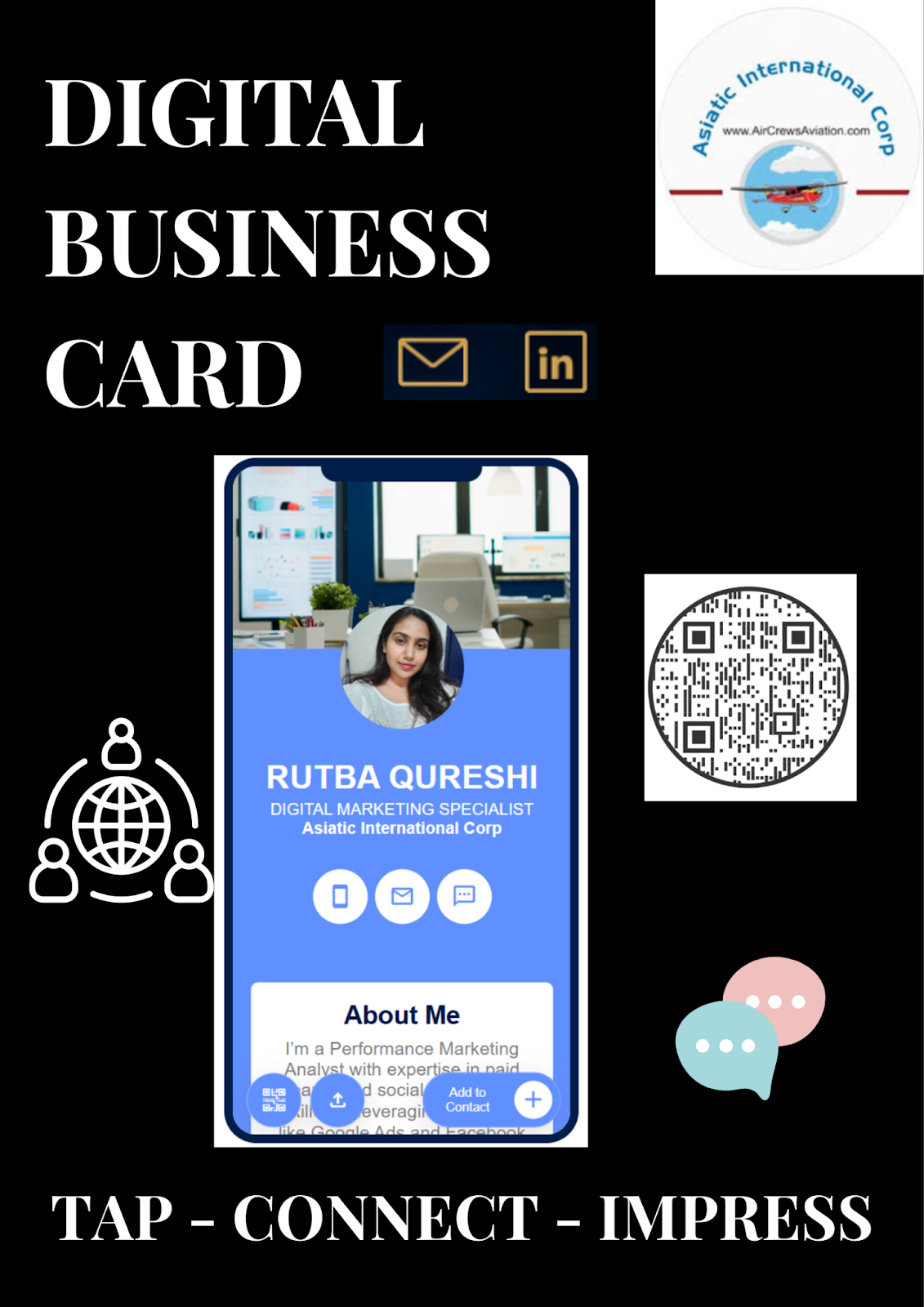
🔗 Want to See One in Action?

Here’s a live example checkout my Digital Business Card:
👉 Rutba Qureshi – Digital Business Card

It’s clean, professional, and loaded with links — everything a modern professional needs to make an impression that lasts.


Your business card should do more than share a phone number — it should tell your story, open doors, and work for you 24/7.

In 2025 and beyond, networking is digital, dynamic, and data-driven. Whether you’re building your personal brand or scaling a team, a digital card is your most powerful introduction.

📌 Ready to level up?
✨ Build yours today on Linko or get inspired by Rutba’s card